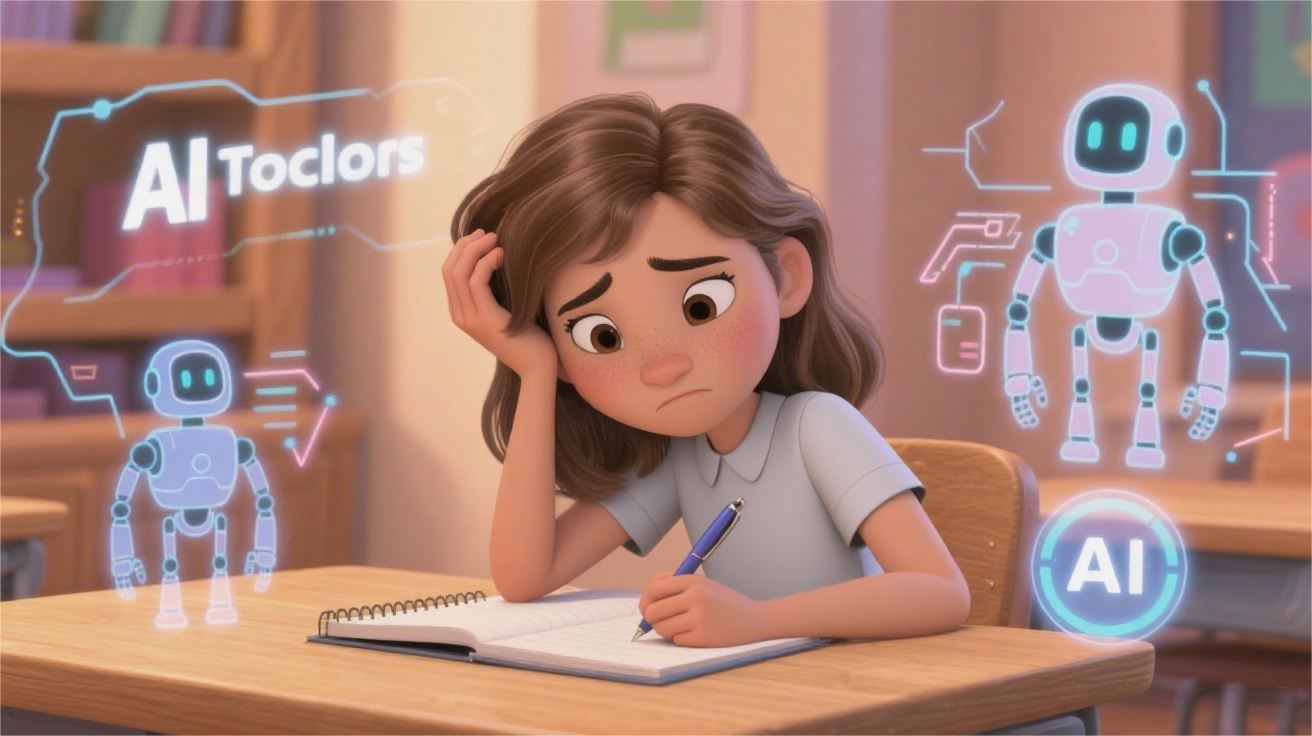
Have you ever spent hours crafting a perfect email in a new language, only to have a friend gently point out that it sounds like it was written by a textbook? I know I have. My attempt at writing a catchy phrase in French once came out as a stiff, overly formal sentence that made me sound like I was from the 18th century. It’s those subtle differences—the idiomatic expressions, the natural flow—that separate a learner from a true native speaker.
The goal isn’t just to be understood; it’s to communicate with authenticity. But how do you get there without living in another country for years? This is where technology becomes your greatest ally. Forget just memorizing grammar rules and vocabulary lists. It’s time to talk about how AI humanizer can be a powerful tool to transform your writing and make you sound like you’ve been speaking the language your whole life.
Contents
The Native Speaker Mindset Versus the Learner’s Mindset
Why is it so hard to sound like a native speaker? The problem isn’t a lack of knowledge; it’s a difference in mental frameworks. We build sentences like engineers, carefully constructing each part. A native speaker, however, uses a more fluid, intuitive approach. Our writing often suffers from:
- Unnatural Phrasing: We might say “I have a big hunger” in German, literally translating “Ich habe großen Hunger,” when a native speaker would simply say “Ich habe Hunger.” These small, literal translations are a dead giveaway.
- Formal Tone: We often rely on the most formal vocabulary we’ve learned, making our writing sound stilted and unnatural, like a formal speech instead of a casual conversation.
- Lack of Idioms: Every language is rich with colorful idioms and common phrases. A native speaker uses them effortlessly, but a learner rarely knows when or how to use them, missing out on a key part of fluent communication.
These are the hurdles AI is perfectly suited to help you overcome, moving you from simply being correct to sounding completely natural.
AI Your Writing Ally and Humanizer
You might be wondering how an AI—a non-human entity—can help you write more like a person. The answer lies in its ability to process vast amounts of human language data. AI has seen millions of natural conversations, articles, and emails, allowing it to recognize and replicate the authentic patterns that make writing sound real. Here’s how you can use it to your advantage:
- Transform Your Text: Take a stiff sentence you’ve written, such as “I hope to see you soon,” and ask an AI to rephrase it in a more casual, idiomatic way. It might suggest something like “Can’t wait to see you!”
- Learn from a New Perspective: A great way to train your brain is to give the AI a topic and ask it to write a short paragraph. Then, analyze its choices. Why did it use that specific verb tense? Why did it choose that particular idiom? This is an invaluable learning experience that helps you internalize the native speaker’s flow.
- Add Your Personal Touch: When you’re ready to share your writing, you’ll want to ensure it has your unique voice. This is where a tool like an ai humanizer comes in handy. It’s designed to add subtle variations, a bit of conversational flavor, and even a touch of personality to your AI-assisted text, making it genuinely sound like you.
One major concern for many is being flagged by an ai detector. This is a legitimate issue, and a key reason to use an ai humanizer. These tools refine the language and ensure the text flows naturally, avoiding predictable patterns that an ai detector might pick up. You can check out tools to give your writing that final layer of humanity.
Infusing Your Personality and Beating the AI Detector
True language mastery isn’t just about grammar; it’s about personality. While AI can give you a perfect draft, you’re the one who needs to make it memorable. The most effective way to avoid an ai detector and truly impress your readers is to blend AI’s efficiency with your own unique human touch.
- Start with AI, End with You: Use AI as your starting point. Let it generate a solid framework or suggest a better way to phrase something. Then, go back and add your own voice. Sprinkle in a personal anecdote, an inside joke, or a strong opinion.
- Break the Rules a Little: Native speakers don’t always write in perfectly structured sentences. They use slang, contractions, and even sentence fragments for emphasis. Don’t be afraid to add these small, human imperfections to your work.
- Tell a Story: No AI can tell your story. Share a personal memory, a thought, or a feeling. Your lived experience is what truly makes your writing unique and powerful, something an ai detector can’t possibly replicate.
Ultimately, AI is a tool. It won’t make you a better writer on its own, but it will open up a world of possibilities for improving. The secret to writing like a native speaker isn’t about perfectly imitating a machine. It’s about using that machine to unlock your own authentic voice.
Final Thoughts: What’s Your Next Step?
Technology has given us the ability to accelerate our language-learning journey in ways we never thought possible. With AI, the path to sounding like a native speaker is shorter and more accessible than ever before. So, are you ready to give it a try?
What’s a language mistake you’ve made that still makes you laugh? Share your story in the comments, and let’s help each other on this journey to true language fluency!