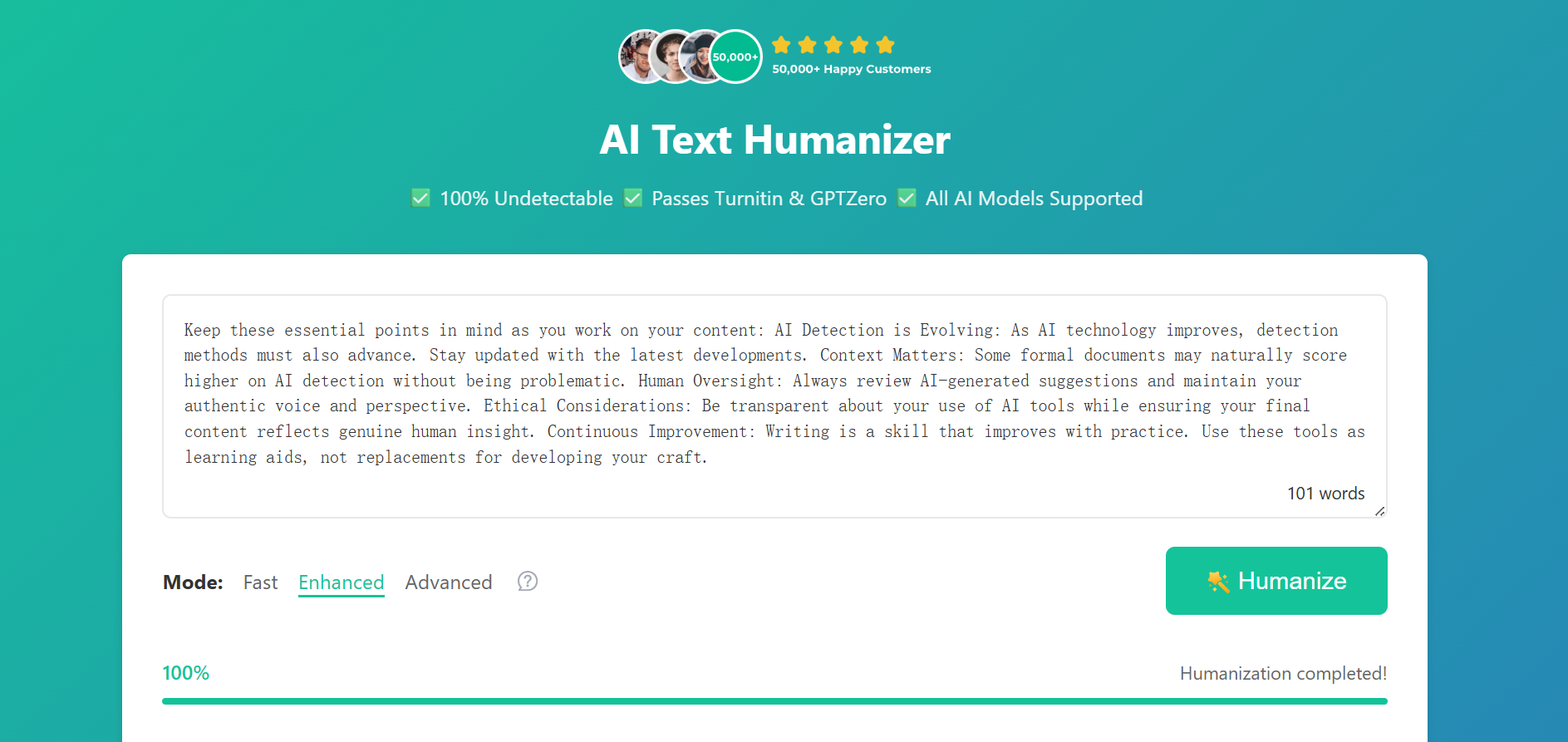
Ever wondered why some AI-generated text screams “robot” while others flow like natural human writing? The secret lies in understanding how AI detection works and knowing the tricks to make your content sound genuinely human.
Contents
How AI Text Detection Actually Works
Think of AI detection like a detective analyzing writing patterns. These tools don’t just look for obvious signs – they dig deep into the subtle patterns that make text feel artificial.
Most detection systems examine several key areas:
- Sentence structure patterns: AI tends to create perfectly balanced, grammatically flawless sentences that humans rarely write naturally.
- Vocabulary choices: AI loves formal, academic words where simple ones would work better.
- Repetitive phrasing: Certain phrases appear over and over in AI-generated content.
- Lack of personal voice: AI writing often sounds neutral and emotionless.
- Predictable flow: The rhythm and pacing feel too systematic.
Why Your AI Text Sounds Too Robotic
Let’s be honest – most AI writing sounds robotic because it’s trying too hard to be perfect. Real human writing has quirks, imperfections, and personality that AI naturally avoids.
Common AI giveaways include:
- Starting every paragraph the same way
- Using overly formal language in casual contexts
- Creating sentences that are grammatically perfect but feel unnatural
- Lacking emotional connection or personal perspective
- Following predictable organizational patterns
Simple Techniques to Humanize Your AI Text
Making AI text sound human isn’t about adding random mistakes – it’s about injecting natural human elements that detection tools recognize as authentic.
1. Vary Your Sentence Length
Mix short, punchy sentences with longer, more complex ones. Real humans don’t write in perfect rhythm – they write how they think and speak.
2. Use Conversational Language
Replace formal words with everyday alternatives. Instead of “utilize,” say “use.” Instead of “commence,” say “start.” Your readers will thank you, and detection tools will too.
3. Add Personal Touches
Include opinions, experiences, or even small imperfections. These human elements make your content feel authentic and trustworthy.
4. Break Up Patterns
Don’t start every sentence or paragraph the same way. Vary your transitions and opening phrases to create natural flow.
5. Include Specific Details
Real humans share specific names, places, and experiences. Generic statements scream AI, while specific details feel genuinely human.
The Humanizer Tool Advantage
While manual editing works, humanizer tools can save you hours while delivering consistently natural results. These tools understand the subtle patterns that make text sound human and apply them systematically.
A good humanizer tool will:
- Adjust sentence structure to feel more natural
- Replace overly formal vocabulary with everyday language
- Add human-like variations in tone and pacing
- Include subtle imperfections that humans naturally make
- Maintain your original meaning while improving readability
Getting Started: Your Action Plan
Ready to make your AI text sound genuinely human? Start with these steps:
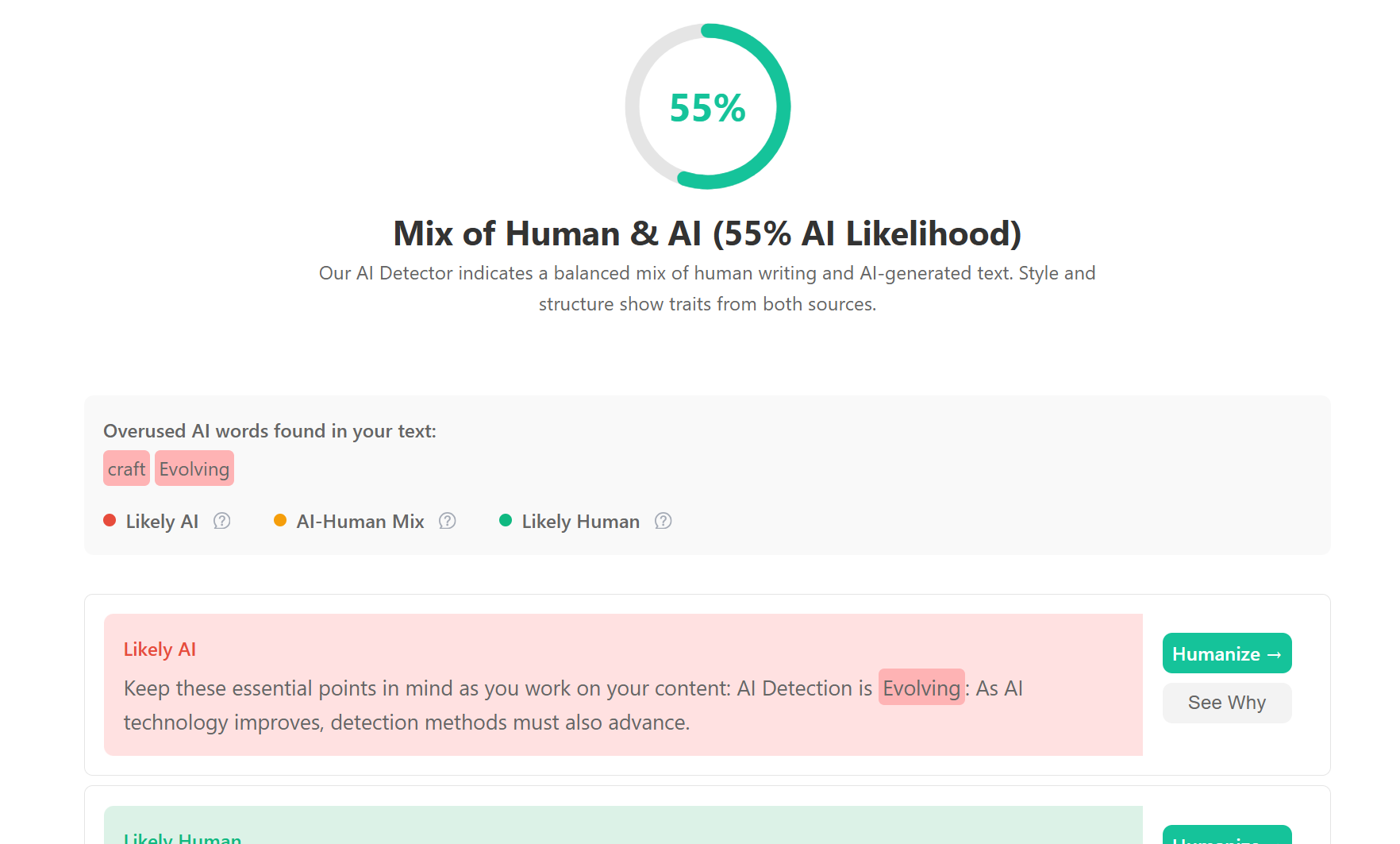
- Test your current content with our AI detection tool to see what’s being flagged
- Identify patterns – look for repetitive phrasing and overly formal language
- Edit systematically – focus on one issue at a time rather than trying to fix everything at once
- Use humanizer tools for consistent results on longer content
- Test again to verify your improvements worked
Remember, the goal isn’t to fool detection tools – it’s to create content that genuinely connects with your readers. When your writing sounds natural and human, both people and AI detection systems will recognize it as authentic.
The key is understanding that human writing has personality, imperfection, and natural flow. Once you master these elements, your content will not only pass AI detection but also engage your readers more effectively.