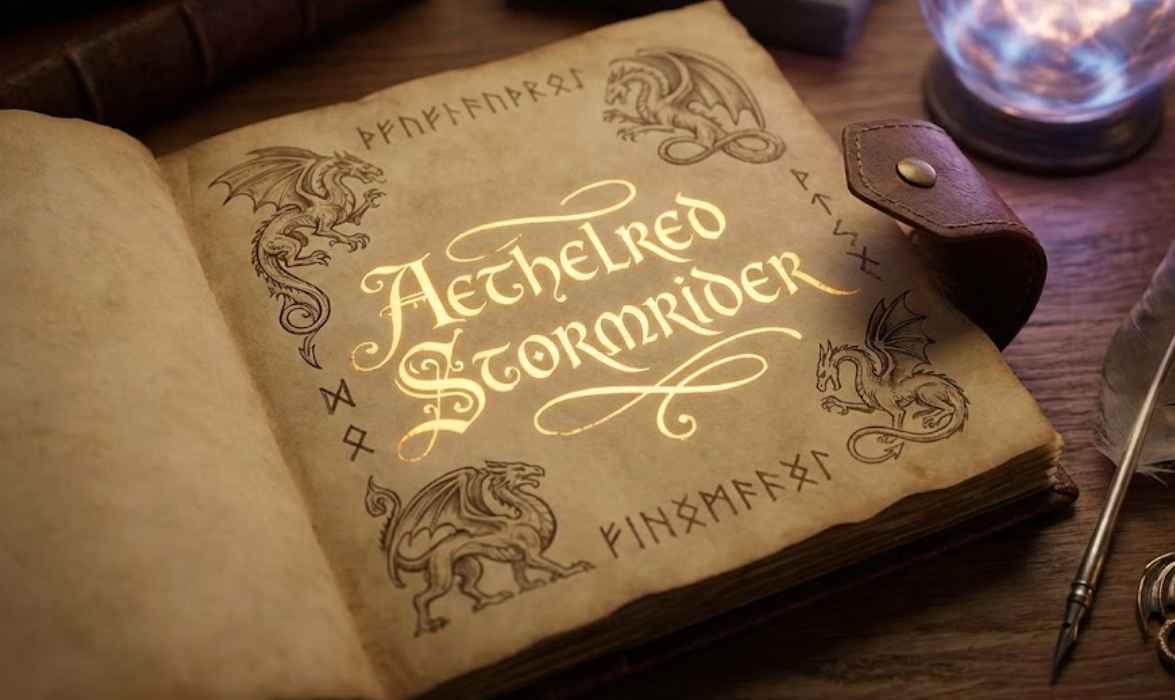
You have done the hard work. You have rolled the stats, chosen a class, and maybe even written a three-page backstory about how your character’s village was burned down by a dragon. You know what they look like, what weapon they carry, and what their fatal flaw is. But then, you hit the wall that stops almost every writer and gamer in their tracks. The blank line at the top of the character sheet. The name.
Naming is easily one of the most frustrating parts of the creative process. You want something that sounds cool but not cheesy. You want something unique, but not so strange that no one at the table can pronounce it. It is a tricky balance. Sometimes you stare at the screen for an hour only to come up with “Bob.“
This is where a fantasy name generator becomes your best friend. It isn’t about cheating or being lazy; it is about keeping the creative flow moving so you can focus on the story.
Contents
Why Names Matter So Much
In fantasy, a name does a lot of heavy lifting. In the real world, names are often just labels. You probably know three people named Mike and four named Sarah. But in a made-up world, a name tells you everything you need to know about a person’s culture, their species, and their personality.
Think about the difference between the names “Grommash” and “Legolas.” You don’t need to see a picture to know that the first one is likely big, strong, and maybe a little scary. The sounds are hard and guttural. The second one flows. It sounds elegant and old. That is the power of sound symbolism.
When you are building a world, names help glue everything together. If everyone in your northern kingdom has names that sound Scandinavian, like “Bjorn” or “Astrid,” and everyone in your southern desert kingdom has names with soft vowels and apostrophes, your reader or player instantly understands that these are two different cultures. It adds depth without you having to write a boring history lesson.
The Problem with “Brainstorming”
The issue with trying to come up with names on your own is that our brains are wired to find patterns we already know. When you try to think of a fantasy name, your brain immediately goes to things it has heard before. You might accidentally name your main character “Aragorn” or “Zelda” without realizing it until it is too late.
Or, you might swing too far in the other direction. We have all seen those fantasy novels where the names look like someone fell asleep on their keyboard. Naming a character “Xyl’ph’n-ath” might look alien on paper, but it is going to annoy your readers every time they see it. If they have to stop and sound it out, it breaks the immersion.
This is the specific itch that a tool scratches. It throws random combinations of syllables at you that follow a structure, giving you fresh ideas that aren’t stuck in the loops of your own memory.
How to Use a Generator Effectively
A lot of people think using a generator means you just click a button once, take the first result, and move on. You can do that, but to get the best results, you should treat it like a brainstorming partner.
Let’s say you are building a Paladin. You want something that sounds noble and strong. You hop onto a tool like the fantasy name generator. You hit the button a few times.
Maybe the first result is “Gorrak.” That feels too rough, more like an Orc. The next one is “Faelivrin.” Too flowery, sounds like an Elf. Then you see “Valorius.” Okay, that’s a bit on the nose, but it’s getting warmer. Then you see “Thandor.“
“Thandor.” That has a nice ring to it. It sounds sturdy. But maybe you want to tweak it. You change it to “Thandoril” or “Thandor the Bright.” The generator gave you the seed, and you grew the plant.
Matching the Name to the Species
One of the best ways to use these tools is to look for patterns that fit the specific race you are playing.
Elves usually have names that flow like water. You want lots of Ls, Rs, and vowels. Names like “Aelindriel” or “Valen” work well. They should sound beautiful and timeless.
Dwarves, on the other hand, need names that sound like stone hitting metal. Short, punchy, and hard. “Torag,” “Brun,” “Hilda.” These names often end in hard consonants like K, G, or D. If you are using a generator and get a long, flowing name for a Dwarf, it might not fit unless that Dwarf is an outcast who was raised by Elves.
Orcs and Goblins often have names that sound like noises. Grunts, growls, and sharp sounds. “Gruk,” “Snag,” “Zog.” These names imply a culture that values strength and action over poetry.
Humans are the wild card. In fantasy, human names can be anything. However, it usually helps to base them on real-world cultures that match the vibe of your setting. If your setting is like medieval England, look for names like “Edward” or “Godfrey.” If it’s inspired by ancient Rome, look for “Cassius” or “Octavia.“
The “Say It Out Loud” Test
This is the most important step that people skip. Once you have picked a name from a list, say it out loud three times.
Why? Because things look different on a screen than they sound in the air. You might find that the cool name you picked is actually a tongue twister. If you stumble over it, your Dungeon Master is going to stumble over it, and eventually, your group is just going to start calling your character “Tim” because it’s easier.
You also need to check for accidental jokes. Say the first and last name together. A name like “Mike Rotch” might look fine individually, but together… well, you get the idea. In a fantasy setting, this is harder to spot, but be careful. You don’t want a villain named “Lord Dumass” (pronounced Doo-mah), because your players will make fun of it.
Beyond Characters: Naming the World
We focus a lot on characters, but the hardest part of being a Dungeon Master or a writer is often naming the places. You have a map with five cities, two mountain ranges, a river, and a haunted forest. They all need names.
If you name everything “Dark Forest” and “High Mountain,” your world feels flat. It feels like a video game tutorial. You want names that imply history.
Generators are amazing for this. You can generate a list of twenty names and pick the ones that share a “sound.” Maybe the cities in the west all end in “-grad” (Stalingrad, Leningrad). Maybe the cities in the east all end in “-ia” (Alexandria, Valencia).
By grouping these generated names together, you create the illusion of linguistics. It makes your world feel lived-in and real. When the players cross the river and the town names start sounding different, they unconsciously know they have entered a new territory.
Handling the “Fantasy Soup” Problem
There is a trap in fantasy writing called “Fantasy Soup.” This happens when you have too many names that are just random collections of apostrophes and Xs.
-
X’al’tuth
-
Q’or’tah
-
Z’an’thul
If you introduce these three characters in the first chapter, your reader is going to check out. They all look the same. They occupy the same “weird word” space in the brain.
Use your generator to find variety. If one character has a complicated name, give the next one a simple name. If the villain is “Malakor the Soul-Drinker,” maybe the hero is just “Kael.” Contrast makes the fancy names stand out more.
Also, consider using nicknames. If you absolutely must use a generated name like “Valandrosius,” have his friends call him “Val.” It grounds the character and makes them feel like a person, not just a collection of stats.
Don’t Wait for Inspiration
The biggest mistake writers make is waiting for the “perfect” name to come to them. They stop writing Chapter 1 because they can’t figure out what to call the innkeeper.
Don’t do this. Use a placeholder. Or better yet, spin the generator, pick the first thing that is “good enough,” and keep writing. You can always change it later. “Find and Replace” is a wonderful tool.
However, you often find that the “good enough” name becomes the perfect name over time. As you write the character, they grow into the name. You stop seeing it as a random collection of letters and start seeing it as them.
Conclusion
Naming doesn’t have to be a chore. It should be the fun part—the moment where a sketch becomes a person. Whether you are writing the next great fantasy trilogy or just trying to get your barbarian ready for a Friday night game, tools are there to help you clear the hurdle.
So, next time you are staring at that blank character sheet, don’t stress. Go to a fantasy name generator, spin the wheel, and see what magic comes out. You might just find the name of the hero who saves the world.